

25 Jun What is Resomation? by Kindly Earth
About Resomation Limited
Resomation Limited was founded in Scotland in 2007 by bio-chemist Sandy Sullivan to introduce alkaline hydrolysis as a real alternative to burial and cremation. With growing public awareness of carbon emissions and environmental responsibility, he saw the opportunity to offer people an additional funeral choice.
In 2008, Resomation Limited partnered with LBBC as their exclusive manufacturer. LBBC is an engineering business based in West Yorkshire. LBBC has over 100 years of history of working with global partners to develop innovative engineering solutions. They manufacture the Resomation equipment and have supported the introduction of the process worldwide.
To find out more about Resomation Limited – visit https://resomation.com
To find out more about LBBC – visit https://lbbcgroup.com
About Kindly Earth
Kindly Earth was founded in 2021 by Julian Atkinson, former owner of JC Atkinson- coffin manufacturer, and Howard Pickard, Chairman of LBBC. They could see the need to give focused support to the introduction of Resomation in the UK.
Kindly Earth’s purpose is:
- To educate and grow awareness of Resomation within the funeral sector in the UK.
- To support the early adopters of Resomation equipment during the start-up period
- To support funeral directors in offering Resomation to their clients.
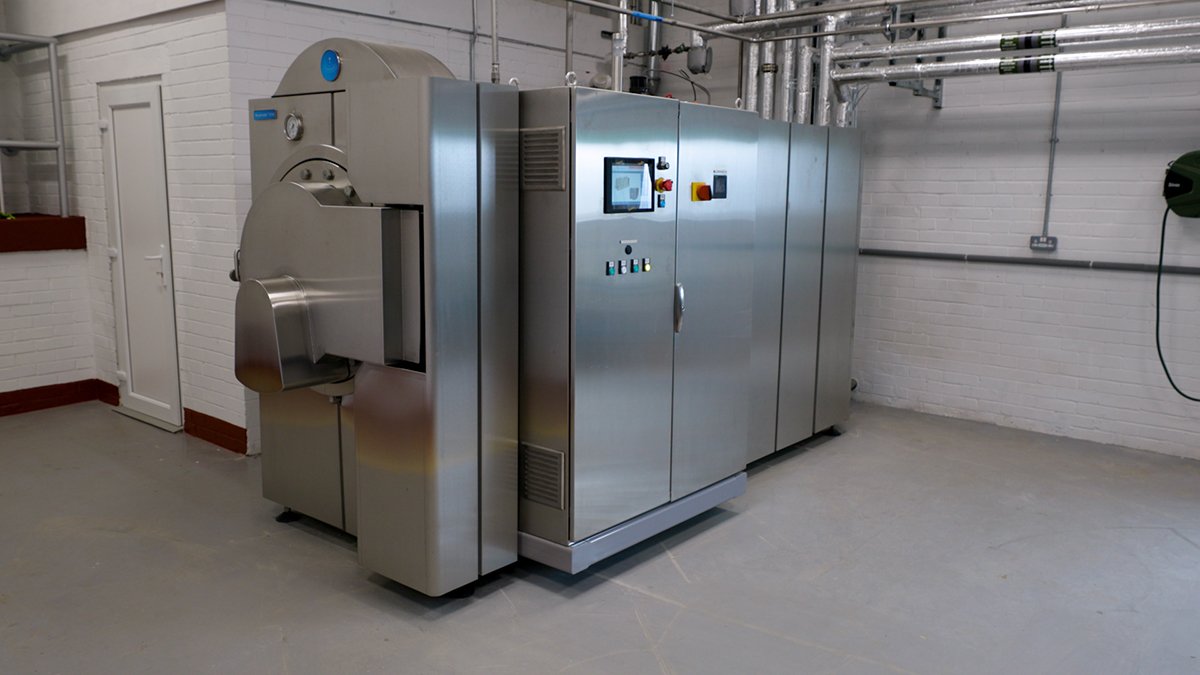
In 2022, a showcase facility was established at New Herrington in northeast England. A full Resomation system is set up here for people in the funeral sector to visit and learn about alkaline hydrolysis.
To find out more or get in touch with Kindly Earth – visit https://kindlyearth.co.uk

What is Resomation (also known as water cremation or alkaline hydrolysis)?
Resomation uses a mixture of water and a 5% alkaline solution to break down the body of the deceased person. The process mirrors the way that the body naturally decomposes after burial, but in a much shorter time of just 3-4 hours.
How does Resomation work?
The deceased person is prepared in the usual way by the funeral director, only without the use of certain materials containing plastic. The deceased person is wrapped in a biodegradable material- not their own clothing- and placed in a chamber. No coffin is required for Resomation.
The chamber is sealed and 95% water and 5% potassium hydroxide (alkaline) solution is added. It is then heated under pressure to a maximum of 150℃ and, over 3-4 hours, the body is reduced to its basic elements. The application of pressure means that the liquid does not boil. The combination of heat and alkaline accelerates the process that would happen naturally after burial. There are no acids involved during the Resomation.
What do families receive afterwards?
After the process is complete, any metal implants or medical devices (which are clean and intact) are retrieved for recycling. The remaining soft bones are dried, cooled and reduced to a fine white powder. These are returned to the family in an urn or container of their choice, in the same way as ashes following cremation.
Families can choose to scatter, bury or keep the powder remains- again the options are the same as for cremation ashes.
What happens to the liquid?
The liquid is cooled, treated to rebalance the pH, and then discharged to the water treatment system, where it is processed by water companies in the usual way. It is completely sterile and contains no DNA or solids. It contains only basic compounds such as sugars, salts, peptides and amino acids. Discharge can only take place under permit from the relevant water authority.
Is there a funeral service or ceremony?
Families can make whatever funeral arrangements they choose, just as they would with burial or cremation.
Why do funeral clients choose Resomation?
Many clients choose Resomation for its environmental advantages. There are no toxic emissions to air and carbon is contained within the process. Also Resomation, like cremation, helps to address the shortage of land available for burials.
However, it is often a simple preference for a process which uses water rather than flame which drives client choice. People use words like “gentler” and “more natural”.
Now that it is legal there, is Resomation available in Scotland?
The Hydrolysis (Scotland) Regulations came into force on March 3rd of this year. Before the service is offered to the public, facilities need to be prepared. Cremation authorities or funeral directors interested in providing the service must apply for planning permission to develop a hydrolysis facility. They must also secure a Consent to Discharge from Scottish Water and obtain approval from the Inspector of Burial, Cremation and Funeral Directors. It will probably take at least six to nine months before the service is offered to the public
Is Resomation now available in England and Wales?
Not yet. The Law Commission has been working to consider the provision of New Funerary Methods in England and Wales and has very recently published two draft Bills for England and Wales respectively https://lawcom.gov.uk/news/new-funerary-methods-get-legal-framework-for-the-first-time/ . These Bills propose a principle-based legislative framework for all new funeral methods and could pave the way for the development of regulations to allow alkaline hydrolysis in the rest of the UK.
Where else in the world is Resomation available?
Resomation is available in:
- United States
- Canada
- Ireland
- New Zealand
Systems are also installed in the Netherlands and Belgium where legislation is pending.
Alkaline hydrolysis from other providers is also available in the US, Australia and South Africa. Anti-apartheid campaigner Archbishop Desmond Tutu chose alkaline hydrolysis for his funeral arrangements in 2022.